Introducción
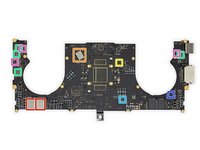
Ir al paso 1 ↓Apple presentó sus procesadores M1 Pro/Max en los MacBook Pros 2021. ¿Cómo modifican estos nuevos SoCs de fabricación propia el resto del silicio de la placa base? ¡Consulta esta guía de identificación de chips para descubrirlo!
¡Felicitaciones a nuestro miembro de la comunidad C. Chin por contribuir a esto!
-
-
-
Identificación de CI, parte 1:
-
Sistema en chip (SoC) Apple APL1103 M1 Pro
-
Memoria SDRAM LPDDR5 Samsung K3LKYKY0EM-ZGCP de 8 GB (16 GB en total)
-
Memoria flash NAND Kioxia KICM225UZ0460 de 128 GB
-
Administración de energía Apple APL1098/343S00515
-
Administración de energía Apple 338S00600
-
Convertidor DisplayPort a HDMI MCDP2920 de Kinetic Technologies
-
Controlador de lector de tarjetas Genesys Logic GL9755A
 Pregunta a FixBot
-
-
-
Identificación de CI, parte 2:
-
Intel JHL8040R Thunderbolt 4 Retimer
-
Memoria flash NOR serie Macronix MX25U6472F de 64 MB
-
Memoria flash NOR serie Winbond W25Q80DVUXIE de 8 MB
-
Convertidor reductor síncrono Renesas RAA225701C
-
Convertidor reductor síncrono LT86422 de Analog Devices
-
Convertidor reductor Texas Instruments TPS62130B
-
Convertidor reductor síncrono de 6 A TPS62180 de Texas Instruments
-
-
-
Identificación de CI, parte 3:
-
Protección contra sobretensiones TVS2200 de Texas Instruments
-
Interruptor de carga ON Semiconductor FPF2495CUCX
-
Cambio de carga de Texas Instruments (probable)
-
Regulador LDO NCV8160AMX500TBG de ON Semiconductor , 250 mA/5,0 V
-
Nexperia 74AVC2T45 - Traductor/transceptor de nivel de voltaje de doble bit
-
Transceptor de bus de un solo bit SN74AXC1T45 de Texas Instruments
-
Buffer único Nexperia 74AUP1G07
-
-
-
Identificación de CI, parte 4:
-
Traductor de nivel multivoltaje de 2 canales Texas Instruments LSF0102
-
Traductor de nivel multivoltaje de 1 bit Nexperia LSF0101
-
Texas Instruments SN74AUP2G07 Buffer doble
-
Texas Instruments SN74LVC1G07 Buffer único
-
Disparador Schmitt Nexperia 74AUP1G17
-
Puerta AND simple Nexperia 74AUP1G08
-
-
-
Identificación de CI, parte 1:
-
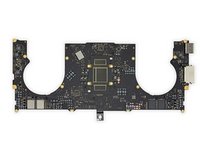
Memoria flash NAND Kioxia KICM225VF9081 de 128 GB
-
Módulo Bluetooth/WiFi USI 339S00912
-
Controlador NFC SN210V de NXP Semiconductor con elemento seguro
-
Controlador de suministro de energía/puerto USB tipo C CD3217B12 de Texas Instruments
-
Cargador de batería de iones de litio Renesas ISL9240
-
Memoria flash NOR serie Winbond W25Q80EWUXIE de 8 MB
-
Memoria flash NOR serie Winbond W25Q80DVUXIE de 8 MB
-
-
-
-
Identificación de CI, parte 2:
-
Controlador PWM de fase de potencia de Renesas
-
Códec de audio Cirrus Logic CS42L84A
-
Amplificador de audio Texas Instruments SN012776B0
-
Convertidor reductor Texas Instruments TPS62130B
-
Regulador de presión Renesas RAA209100 (probable)
-
Controlador de retroiluminación LED LP8548B1 de Texas Instruments
-
Repetidor dual USB 2.0 TUSB2E22 de Texas Instruments (probable)
-
-
-
Identificación de CI, parte 3:
-
Amplificador de detección de corriente INA190A3 de Texas Instruments
-
Amplificador de detección de corriente INA190A4 de Texas Instruments
-
Amplificador operacional de entrada/salida riel a riel de 1,5 MHz Maxim Integrated MAX9620
-
Amplificador operacional único NCS333ASQ3T2G de ON Semiconductor
-
Matriz de señales mixtas de Dialog Semiconductor (probable)
-
Expansor de E/S de 16 bits PCAL6416A de NXP Semiconductor
-
Interruptor analógico SPST doble ADG1422BCPZ de Analog Devices
-
-
-
Identificación de CI, parte 4:
-
Referencia de voltaje de 2,5 V REF3325 de Texas Instruments
-
Regulador LDO ajustable de 500 mA TLV75801P de Texas Instruments
-
Regulador LDO Texas Instruments TLV75533P de 500 mA/3,3 V
-
Regulador LDO Texas Instruments LP5907SNX-3.0 de 250 mA/3,0 V
-
Regulador LDO de 250 mA/1,8 V (probable) de ON Semiconductor NCP163BMX180TBG
-
Regulador LDO Texas Instruments TLV70733P de 200 mA/3,3 V
-
Regulador LDO de 200 mA/1,825 V TPS7A201825 de Texas Instruments
-
-
-
Identificación de CI, parte 5:
-
Transceptor traductor de 4 bits Nexperia 74AVC4T774
-
Transceptor traductor Nexperia 74AUP1T45
-
Traductor de nivel multivoltaje de 2 canales Texas Instruments LSF0102
-
Traductor de nivel multivoltaje de un solo bit Nexperia LSF0101
-
Nexperia 74AVC2T45 - Traductor/transceptor de nivel de voltaje de doble bit
-
Traductor de nivel de voltaje de un solo bit SN74AUP1T34 de Texas Instruments
-
Transceptor de bus de un solo bit SN74AXC1T45 de Texas Instruments
-
-
-
Identificación de CI, parte 6:
-
Búfer Nexperia 74AXP1T34
-
Búfer doble Nexperia 74AUP2G07
-
Texas Instruments SN74LVC1G07 Buffer único
-
Disparador Schmitt Nexperia 74AUP1G17
-
Puerta OR doble Nexperia 74LVC2G32
-
Texas Instruments SN74AUP1G32 Puerta OR simple
-
Protector de puerto USB tipo C TPD4S311A de Texas Instruments
-
-
-
Identificación de CI, sensores:
-
Acelerómetro/giroscopio MEMS de 6 ejes Bosch Sensortec BMI282
-
-
-
Identificación del CI:
-
Microcontrolador ARM Cortex-M4 de 32 bits con memoria flash de 1 MB de STMicroelectronics STM32L4P5QG
-
Controlador táctil Broadcom BCM5976C1
-
Convertidor A/D Maxim Integrated MAX11390A (probable)
-
Regulador de corriente de puente H MP6519 de 5 A de Monolithic Power Systems
-
Monitor de voltaje de 1,67 V TPS3831G18 de Texas Instruments
-
Interruptor de carga Texas Instruments TPS22915
-
-
-
Identificación de CI, sensores:
-
Acelerómetro de 3 ejes Bosch Sensortec BMA282
-
Sensor de temperatura TMP461 de Texas Instruments
-
-







Un agradecimiento especial a estos traductores:
100%

¡ Angel nos está ayudando a reparar el mundo! ¿Quieres contribuir?
Empezar a traducir ›
10Guía Comentarios
In practise, the efficiency of an LDO regulator is dependent on how much voltage it is dropping. While operating, an LDO is effectively a resistor that varies in real-time to ensure its output voltage stays stable despite changes in load current.
Power = I (current) x V (voltage)
Since an LDO is a resistive element, yes, it burns off energy as heat in this process. So an LDO dropping 18V to 5V could be very inefficient, more so when driving a higher current load as shown by the formula above. However, if an LDO is used to generate a 3.3V rail from a 5V rail, it is dropping just 1.7V, resulting in less power dissipation for the same load current.
You’re right, using an LDO for a large voltage drop is not good electrical design. But LDOs have excellent noise rejection performance, meaning they can take a noisy rail from a switching buck/boost converter with lots of transient or high-draw components on it, and create a much cleaner rail for lower-current, more sensitive devices. This is what I expect Apple’s doing.
LDOs drop the difference in voltage as heat, yes - hence the voltage difference between input and output determines the efficiency (eg a 3.0v LDO fed by 6.0v is 50% efficient).
In many cases where LDOs are used in designs the amount of lost power is negligible as the current being drawn is so small - simply not worth using a switcher for that rail. Also, LDOs typically have cleaner output so often an LDO is used to isolate an analog subsystem from noise on the main (digital) system rails.
